
In drag racing, traction is everything. You can have 1,500 horsepower under the hood, but if that power does not reach the pavement evenly, you will smoke the tires or veer into the opposite lane. This is where chassis tuning becomes critical. An anti roll bar for drag racing is a suspension component designed to control body roll during launch, keeping both rear tires planted equally. Unlike a street sway bar that reduces cornering lean, a drag-specific anti-roll bar works primarily at the starting line. It prevents the chassis from twisting under hard acceleration, ensuring that the left and right rear tires share the load. Without this bar, torque from the engine lifts the left front tire while unloading the right rear, creating instant wheelspin and a trip to the wall.
The Science of Chassis Twist
When a drag car launches, engine torque tries to rotate the chassis around the driveshaft axis. This lifts the driver-side front corner and presses down the passenger-side rear corner. Meanwhile, the driver-side rear tire loses vertical load. An anti roll bar for drag racing connects the left and right rear suspension arms, resisting this twisting motion. The result is more equal tire loading and straight-line stability.
Engineering Trust in Drag Racing Suspension
Decades of chassis-building experience, expertise, authoritativeness, and trustworthiness back modern anti-roll bars. Brands like BMR Suspension, UMI Performance, Strange Engineering, and QA1 have tested their designs on 200-mph door-slammers.
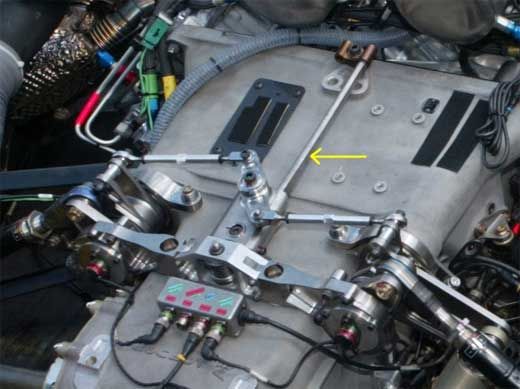
Adjustable Rate Blade System – Many anti-roll bars feature a multi-hole blade arm instead of a traditional splined bar. By moving the bolt to different holes, you change the bar’s effective stiffness in minutes. The benefit is fine-tuning chassis separation without buying a new bar for every track condition.
Chromoly Steel Construction – Chromoly offers higher tensile strength than mild steel while weighing less. The benefit is a bar that survives repeated 5,000-rpm clutch dumps without bending or cracking, all while adding minimal weight to the rear of the car.
Solid vs. Hollow Bar Options – Solid bars are stiffer for high-horsepower cars. Hollow bars are lighter and suit moderate horsepower builds. The benefit is matching bar type to your specific power level and weight distribution needs.
On-Car Adjustability – Premium designs allow adjustment without removing the bar. A simple turn of a heim joint changes preload. The benefit is making quick changes between test-and-tune passes based on how the car leaves.
Torque Arm and Ladder Bar Compatibility – A proper anti roll bar for drag racing works alongside torque arms (on third and fourth-gen F-bodies) or ladder bars (on purpose-built race cars). Brackets are designed to clear suspension travel. The benefit is bolt-on installation without cutting or welding for most popular platforms.
Heat-Treated Splines – On splined bars, the connection between the bar and the arms receives heat treatment to prevent stripping under high torsional loads. The benefit is reliability after hundreds of hard launches.
Reading Your Car’s Need
How do you know if you need an anti roll bar for drag racing? Watch your car from behind during launch. If the left rear tire lifts or spins while the right rear plants hard, chassis twist is robbing you of 60-foot time. Also check tire markings. Uneven rubber deposits across the tread width indicate inconsistent loading. Finally, listen for one tire spinning while the other hooks. That differential works harder, and so will your wallet when parts break.
Installation Tips
Always install the anti-roll bar with the car at ride height and the suspension loaded. Tightening heim joints or bushings with the car in the air preloads the bar incorrectly. Use anti-seize on all adjustment threads. Torque mounting bolts to spec. Start with the bar in its softest setting, then increase stiffness until the car leaves straight without the right rear unloading. Too much bar creates a violent side-to-side shake known as “wheel hop” or “axle tramp.”
Looking for more ways to improve your launch consistency? Read our guide on the delay box drag racing system to complement your chassis setup.
Common Setup Mistakes
Many racers set the bar too stiff on marginal tracks, causing the rear to bounce rather than plant. Others forget to disconnect the bar when testing changes to shocks or springs. The bar masks suspension problems. Always tune your shocks first, then adjust the bar. Also avoid welding the bar mounts to a rusted or thin section of chassis. That mount will tear out on the starting line.
Final Gear
Your drag car is a system. Engine, transmission, tires, and chassis must work together. An anti roll bar for drag racing is not a magic fix for poor suspension tuning, but it is an essential tool for any car making serious power. It levels the playing field between the left and right rear tires, fights chassis twist, and keeps you in your lane when the tree drops. Install it correctly, adjust it patiently, and watch your 60-foot times fall. Hook hard, stay straight, and collect that timeslip.