The Ultimate Guide to the Race Car Dash: From Basic Gauges to Advanced Telemetry

Speed is only part of the equation. The difference between winning and losing often comes down to data—specifically, how quickly and clearly that data is communicated to the driver. That critical job belongs to the race car dash. Far more than a simple speedometer, a properly designed race car dashboard serves as the central nervous system of the vehicle, delivering real-time engine health, chassis dynamics, and driver alerts within fractions of a second. Whether you are building a weekend autocross car or a full-fledged track-day weapon, understanding the race car dash is essential for safety, performance, and reliability.
What Exactly Is a Race Car Dash?
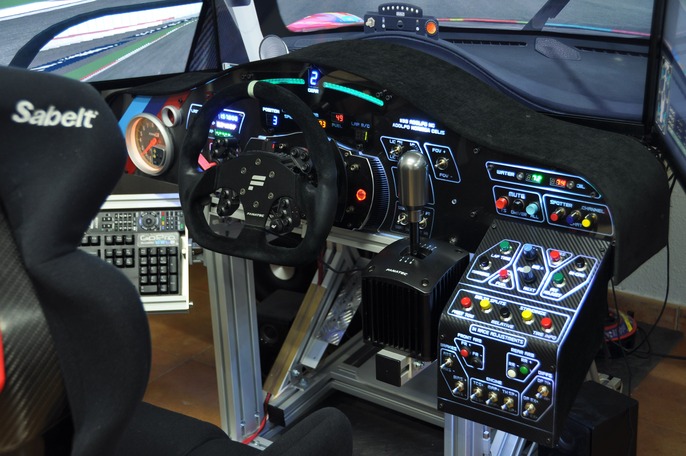
At its core, a race car dash is the instrument panel mounted directly in front of the driver. However, unlike a passenger car’s dashboard—which includes air vents, infotainment screens, glove compartments, and comfort features—a racing dashboard strips away everything non-essential. What remains is a focused, minimalist array of gauges, lights, switches, and often a digital display screen. The primary mission of any race car dash is to present critical information (RPM, speed, water temperature, oil pressure, fuel level, gear position, and warning lights) in a layout that the driver can process without moving their eyes more than a few degrees off the racing line.
Every component on a race car dashboard serves a survival or performance function. There is no radio, no navigation system, and no ambient lighting controls. In many purpose-built race cars, the dash is little more than a carbon fiber or aluminum panel holding five to seven essential readouts and a row of toggle switches for ignition, fuel pumps, and cooling fans.
Why the Race Car Dash Matters More Than You Think
Beginner drivers often overlook the dashboard, focusing instead on horsepower, suspension tuning, or tire compound. But experienced racers know that a well-designed race car dash can directly improve lap times. Here is why:
- Reduced Cognitive Load: When you are braking from 140 mph into a tight hairpin, you do not have time to search for a tiny needle. A race car dash uses large, high-contrast numerals, colored zones (green = good, yellow = caution, red = danger), and programmable alarms so the driver instantly knows if something is wrong.
- Predictive Shifting: Modern digital dashes include sequential shift lights—typically five to ten LEDs across the top of the unit. As RPMs climb, the lights illuminate from left to right or bottom to top. When the final red light flashes, the driver shifts. This allows the driver to keep eyes on the track rather than glancing down at a tachometer needle.
- Engine Protection: A race car dash with audible or bright flashing alarms can save an engine. For example, if oil pressure drops suddenly due to a broken belt or oil leak, the dash can trigger a bright red strobe. The driver can then clutch in and shut down before spinning a bearing or seizing the motor—saving thousands of dollars.
- Data Logging for Improvement: High-end race car dash units (like those from AIM, MoTeC, Racepak, or AiM Sports) include built-in data loggers. After a session, you can download throttle position, brake pressure, steering angle, lateral G-forces, and lap times. Analyzing this data reveals where you are losing time—braking too early, getting on throttle too late, or over-slowing for corners.
Types of Race Car Dashes
Not all race car dash setups are the same. The right choice depends on your budget, vehicle type, and competition level.
Analog Race Car Dash
For vintage racers, classic formula cars, or budget-minded builds, an analog race car dash uses physical gauges with needles and printed faceplates. Common brands include Auto Meter, VDO, and Stewart Warner. Analog dashes are simple, reliable, and easy to troubleshoot. However, they offer no data logging, take longer to read, and require multiple individual gauges (tach, speedo, water temp, oil pressure, fuel, voltage). Analog race car dash panels are often made of aluminum or carbon fiber with CNC-cut holes for each gauge. They look authentic but lack modern features.
Digital Race Car Dash
Digital dashes have become the standard in almost all forms of modern motorsports, from club racing to professional series like IMSA and Formula 1. A digital race car dash uses a single LCD or TFT screen (typically 5 to 10 inches diagonally) to display all information on customizable pages. Drivers can create different layouts for practice (many data fields), qualifying (only essentials plus predicted lap time), and racing (large RPM bar, gear, and water temperature). Digital race car dash units from brands like AIM MXS, MoTeC C125, and Racepak IQ3 also include GPS-based predictive lap timing, track mapping, and direct ECU integration via CAN bus.
Hybrid Race Car Dash
Some builders use a hybrid approach: a digital dash for tach, speed, and data logging, plus two or three analog gauges for oil pressure and water temperature as backups. This hybrid race car dash offers redundancy—if the digital screen fails, you still have critical engine health info from the analog gauges.
Custom Race Car Dash Builds
For serious fabricators, a custom race car dash is built from scratch. This involves cutting a backing plate (carbon fiber, aluminum, or ABS plastic), selecting gauges or a digital display, adding warning lights (shift light, low oil pressure, high temp, alternator fault), and wiring everything to sensors and the ECU. Custom race car dash builds also integrate switches for ignition, starter, fuel pump, cooling fan, and fire suppression system. Many custom dashes use a quick-disconnect wiring harness (Deutsch or Autosport connectors) so the entire dash can be removed for service in under two minutes.
Key Features to Look for in a Race Car Dash
When shopping for a race car dash, consider these specifications:
- Screen Visibility: Must be sunlight-readable (minimum 800 nits brightness for outdoor racing). Glare-resistant coatings are essential.
- Input Channels: How many analog (temperature, pressure) and digital (RPM, speed) inputs does it support? A good race car dash should handle at least 4-6 analog sensors.
- CAN Bus Compatibility: Most modern ECUs (Haltech, Holley, MegaSquirt, Motec, OEM) output engine data over CAN. Your race car dash should read this protocol directly.
- Logging Memory: Internal memory (2GB minimum) or SD card slot for high-resolution data logging (up to 200 Hz sampling).
- Shift Light Integration: Built-in sequential LEDs on the top edge of the dash are ideal; otherwise, you will need an external shift light module.
- GPS Receiver: Built-in 10Hz or 20Hz GPS provides accurate lap timing, predictive lap times, and track mapping without external beacons.
- Vibration and Temperature Rating: A race car dash must survive continuous engine vibration, 180°F+ cockpit temperatures, and moisture from driver sweat or open-cockpit rain.
Installation Tips for Your Race Car Dash
Mounting a race car dash is not a simple plug-and-play job for most vehicles. Follow these best practices:
- Line of Sight: The top of the dash should sit just below the driver’s natural forward gaze—no lower than the bottom of the windshield. Shift lights must be visible in peripheral vision.
- Vibration Isolation: Use rubber well nuts, silicone mounting feet, or vibration dampers. Hard-mounting a digital race car dash to a thin aluminum panel will eventually crack circuit boards.
- Wiring: Use automotive-grade TXL wire, heat shrink connectors, and a centralized fuse block. Label every wire. For digital dashes, twist the CAN bus wires together and keep them away from ignition leads.
- Sensor Matching: Ensure your temperature and pressure sensors match the dash’s input range (e.g., 0-5 volt linear output, 0-100 psi, 0-300°F). Calibrate the dash to each sensor.
- Backup Power: Consider a small capacitor or lithium battery backup if your race car dash logs data. This prevents file corruption when you hit the master kill switch.
Common Mistakes to Avoid
Many first-time race car builders make these errors with their race car dash:
- Too Much Information: Displaying 15 data fields on a 5-inch screen makes everything unreadable at speed. Stick to 5-7 critical parameters.
- Ignoring Warning Lights: Without bright (at least 5000 mcd) external warning lamps, you will miss an alarm while battling for position.
- Poor Grounding: Digital race car dashes are sensitive to electrical noise. Ground the dash directly to the engine block or battery negative, not to chassis sheet metal.
- No Backup Analog Gauge: If your digital race car dash freezes (rare but possible), you will have no oil pressure reading. One analog gauge for oil pressure is cheap insurance.
The Future of Race Car Dashes
As motorsports technology advances, the race car dash is evolving into a true driver interface. New developments include:
- Augmented Reality (AR) Overlays: Some prototype systems project a racing line, braking points, and corner apexes directly onto a transparent heads-up display built into the dash.
- Tire Temperature Mapping: Infrared sensors read tire surface temperatures every corner, displayed as a color heat map on the dash.
- Biometric Integration: Heart rate, hydration level, and G-force tolerance warnings displayed alongside engine data.
- Wireless Tuning: Adjust fuel maps and traction control settings from a tablet that syncs wirelessly to the race car dash.
Whether you choose a simple three-gauge analog panel or a $3,000 digital data logger, your race car dash is one of the most important safety and performance components in your vehicle. It protects your engine, informs your driving, and provides the data you need to shave tenths off every lap. Start by defining your budget and competition goals, then select a race car dash that offers clear visibility, reliable sensors, and robust data logging. Do not cut corners here—your eyes and your engine depend on it. Build it right, wire it carefully, and you will have a cockpit that works as hard as you do.