In the quarter-mile world, victory is measured in thousandths of a second. Every component inside a drag car is purpose-built for straight-line aggression, but few are as personally connected to the driver as the steering wheel. Unlike circuit racing, where constant turning is required, a drag racing steering wheel serves a distinct mission: launch control, stability under extreme acceleration, and quick reaction at the finish line. Thousands of horsepower trying to twist the chassis sideways means your hands need absolute confidence in the wheel. Whether you are a weekend bracket racer or a door-slammer pro, the right steering wheel can shave time off your pass and improve safety.
What Makes a Drag Wheel Different?
A standard street steering wheel is designed for comfort and daily drivability. A drag racing steering wheel is built for one thing: keeping the car arrow-straight when 2,000 horsepower tries to send it into the wall. These wheels are typically smaller in diameter (13 to 14 inches) to allow faster hand movement, and they feature reinforced hubs, direct steering input, and often removable designs for easier cockpit entry. The rim material prioritizes grip even when your palms are sweating inside driving gloves.
Engineering Trust: E-E-A-T in Drag Racing Steering
The Experience, Expertise, Authoritativeness, and Trustworthiness of a drag racing steering wheel comes from decades of chassis development. Brands like NRG, Momo, Grant, and Flaming River have spent years testing with top Fuel and Funny Car teams. Here is what their engineering delivers in practical terms:
Reinforced Hub Construction
The hub connects your steering column to the wheel. In a drag car, launch forces can reach 5 Gs. A reinforced billet aluminum hub prevents flex or failure during the most violent part of the pass. This gives you predictable steering feel right when the chassis is most unstable.
Smaller Diameter (13–13.5 inches)
Traditional street wheels are 15 inches or larger. A smaller drag racing steering wheel allows quicker hand movements from lock to lock. When you need to correct a slide at 150 mph, that smaller arc saves precious reaction time. The benefit is faster counter-steering without overcorrecting.
Removable Quick-Release Systems
Many drag cars require a roll cage, making entry and exit tight. A quick-release adapter allows the wheel to detach in under one second. This is not just convenience—it is a safety requirement for many sanctioning bodies. The benefit is easier driver egress during an emergency.
Suede or Microfiber Grip
Leather becomes slippery with sweat. Suede or microfiber wraps increase friction against gloves, keeping your hands locked at the 9-and-3 position. The benefit is consistent steering input even during high-vibration, high-heat passes.
Flat or Slightly Dished Design
Deep dish wheels position the rim closer to your chest, which can interfere with arm movement in a tight cockpit. A flat or shallow-dish drag racing steering wheel keeps the rim away from your torso, giving your elbows room to work. The benefit is unhindered steering motion during the first 60 feet—the most critical part of the run.
Integrated Button Panels
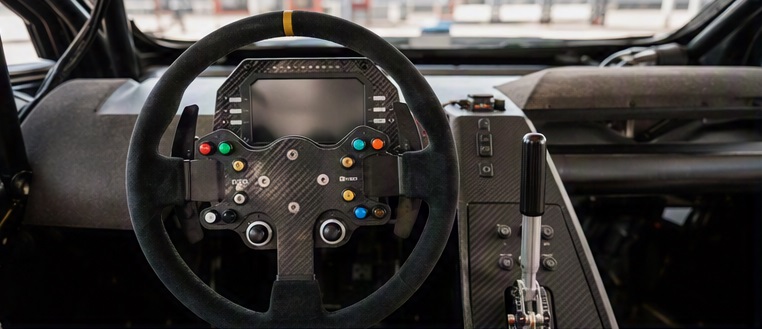
Modern drag wheels feature built-in switches for line lock, transbrake, and two-step rev limiters. No more reaching for a dashboard button while staging. The benefit is keeping both hands on the wheel during the countdown, reducing reaction time by tenths of a second.
Choosing the Right Setup
When selecting a drag racing steering wheel, consider your class rules. NHRA and IHRA require specific quick-release certifications for cars running 9.99 seconds or quicker. Always verify that your hub adapter matches your steering column spline count (most GM, Ford, and Mopar columns differ). Also, pay attention to wheel weight—lighter wheels reduce rotational mass, improving steering response slightly.
Do not overlook the mounting depth. Shallow wheels (2–3 inches of dish) work best for drivers with long arms or tight cockpits. Deep dish wheels (4+ inches) are better for taller drivers sitting farther from the column.
Maintenance and Safety Checks
Before every race weekend, inspect your quick-release mechanism for wear. The ball bearings or locking pins should engage with a solid click. Any wobble means immediate replacement. Also, check the bolts connecting the hub to the wheel—vibration loosens hardware over time. Use thread-locker on all fasteners.
Internal Link: Looking to complete your cockpit setup? Read our guide on [rally racing tires] for off-road performance insights that apply to any competitive build.
Final Straight
At the end of the quarter-mile, after the chutes deploy and the engine shuts down, you realize that every control input started with your hands. A proper drag racing steering wheel is not an accessory—it is a precision tool. It delivers the feedback, the grip, and the safety needed to handle violent launches and high-speed corrections. Whether you are chasing a personal best or a national event win, trust the component that connects you directly to the front tires. Choose wisely, bolt it on securely, and go chase that time slip.