

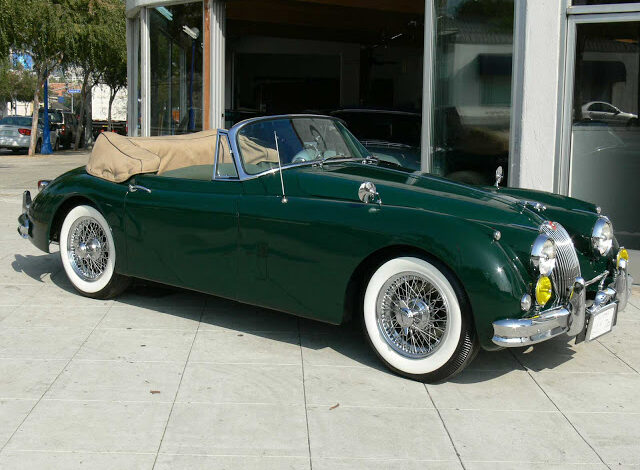
In the pantheon of automotive finishes, few colors carry the weight of British racing green. It is not merely a hue but a code—a shorthand for tradition, tenacity, and quiet confidence. More than a century after it first graced a competition car, british racing green car paint remains one of the most complex, rewarding, and challenging choices an owner or manufacturer can make. Understanding its full profile requires balancing romance with reality: the deep, shimmering elegance against the practical maintenance, and the historical prestige against modern visibility concerns.
Benefits and Advantages
The most immediate benefit of British racing green is its unparalleled aesthetic depth. Unlike flat blacks or primary reds, a high-quality British racing green finish—often layered with fine metallic or pearl flakes—possesses a chameleon-like quality. Under overcast skies, it appears a sophisticated, near-black. In direct sunlight, it explodes into deep emerald and forest tones. This dynamic range gives a car a living, breathing surface that changes with the environment. For a weekend sports car or a concours restoration, this visual complexity offers a level of sophistication that cheaper, simpler colors cannot replicate.
Another significant advantage is exclusivity and identity. On roads flooded with silver, white, and gray crossovers, a British racing green car stands apart without screaming for attention. It signals that the owner values history and craftsmanship over trends. For brands like Aston Martin, Jaguar, Lotus, and Morgan, this color is a factory signature—choosing it instantly connects the car to Le Mans victories, Brooklands lap records, and the golden era of gentleman racers. This brand alignment can even enhance resale value. A classic E-Type or modern Vantage finished in authentic British racing green is often more desirable to purists than a non-standard color, assuming the paint is correctly executed.
From a technical standpoint, modern formulations of british racing green car paint have improved dramatically. Today’s two-stage (base coat plus clear coat) and three-stage (base, mid-coat pearl, clear) systems offer excellent UV protection. High-quality ceramic coatings lock in the gloss, repel water spots, and make washing easier. Additionally, dark greens are excellent at hiding minor panel gaps or body imperfections that lighter colors would exaggerate. A well-prepped green body looks tighter and more cohesive than the same car in white or yellow.
Disadvantages and Cons
However, for all its beauty, British racing green comes with real-world compromises. The primary disadvantage is heat absorption. Like black and dark blue, dark green absorbs more solar radiation than light colors. On a summer day, the hood and roof of a green car can become significantly hotter, taxing the air conditioning system and accelerating wear on the dashboard and upholstery. For track-day enthusiasts, this also means higher under-hood temperatures, which can affect engine intake efficiency.
Maintenance is the second major con. While a light silver hides dust and swirl marks for weeks, British racing green shows every imperfection. Dust, pollen, water spots, and light scratches are immediately visible against the dark, reflective surface. Swirl marks from automatic car washes or improper drying techniques will turn the beautiful finish into a dull, spider-webbed disappointment. Owners must commit to the two-bucket wash method, high-quality microfiber towels, and regular paint correction or ceramic coating. It is not a color for the casual car owner.
Visibility and safety represent another drawback. Studies in traffic safety consistently show that dark-colored cars—including green—have a higher accident rate at dawn, dusk, and in poor weather than white, yellow, or orange vehicles. A British racing green car can blend into a rainy asphalt background or disappear under tree cover. While modern LED daytime running lights mitigate this risk, the fundamental issue remains: you are less visible to other drivers. For a dedicated track car, this is less critical, but for a daily driver on crowded highways, it is a genuine concern.
Furthermore, color matching for repairs is notoriously difficult. If a panel gets damaged, mixing an exact batch of British racing green is a fine art. The formula varies wildly between manufacturers (Aston’s “Viridian Green” differs from Jaguar’s “British Racing Green” or Lotus’s “Elise Green”), and even slight variations in metallic flake size or clear-coat tint become glaringly obvious. Repairs are expensive and require a skilled painter with a spectrophotometer. Many body shops dread dark green jobs because the customer’s expectation of perfection is so high.
Values and Intangible Worth
Beyond practical pros and cons lies the true essence of British racing green: its values. This color embodies the concept of subtle superiority. Unlike Italian rosso corsa, which announces victory, or German silver, which showcases engineering, British racing green whispers confidence. It is the color of a driver who does not need to shout. This aligns with core British cultural values of understatement, fair play, and endurance—the same spirit that won Le Mans through reliability, not just raw speed.
There is also a deep environmental and natural value. Green, after all, is the color of life—of rolling English countryside, ancient forests, and damp moss on a stone wall. A car in British racing green feels rooted in the landscape rather than imposed upon it. It is no accident that many eco-conscious luxury brands now offer green hues; the color psychologically connects performance with nature, reminding us that speed and stewardship can coexist.
Finally, British racing green carries a value of patina and memory. For enthusiasts, seeing a green Jaguar or Lotus triggers instant nostalgia—for childhood posters, for vintage races at Goodwood, for a father’s garage project. You are not just painting a car; you are preserving a lineage. That emotional connection is impossible to quantify but impossible to ignore.
Choosing british racing green car paint is a decision of the heart, not just the eye. The benefits—stunning depth, heritage identity, and improved modern durability—are significant. The disadvantages—heat retention, high maintenance, safety concerns, and repair difficulty—are equally real. But for the true enthusiast, the values outweigh the costs. You accept the extra washes and the careful driving because the reward is a car that feels alive, storied, and distinct. British racing green does not apologize for being high-maintenance. It simply asks if you are worthy of its legacy.