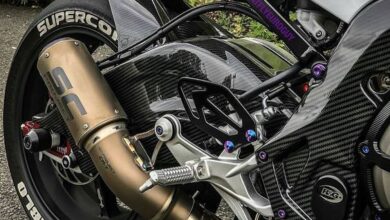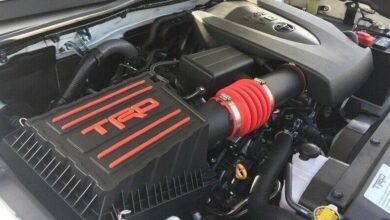
In the world of automotive enhancement, moving beyond catalog upgrades to custom carbon fiber car parts represents a definitive leap toward ultimate performance and exclusivity. For the BMW enthusiast, this transition isn’t merely aesthetic; it’s a calculated engineering decision that delivers measurable gains in weight reduction, structural rigidity, and aerodynamic efficiency. Off-the-shelf carbon fiber trim satisfies a desire for style, but bespoke, custom-fabricated carbon components are where true transformation occurs, tailoring a vehicle to its owner’s exact performance targets and visual ethos.
More than just engine tuning: Why do custom carbon fiber exhaust pipes work?
The core value of custom carbon fiber car parts lies in their application-specific design. While a pre-pressed replacement hood may save weight, a custom hood can be engineered with integrated vents placed precisely to extract heat from a track-tuned engine bay, or designed with specific reinforcements for mounting pins. A custom front splitter isn’t just a universal lip; it’s calculated, using aerodynamic data or real-world testing to determine the optimal angle, depth, and mounting points to generate genuine downforce for a particular chassis at targeted speeds. This level of integration turns carbon fiber from a decorative material into a functional performance tool.
For BMW models – especially older E-series models or specific M-range models – original factory carbon fiber parts can be difficult to find. Custom carbon fiber fabrication solves this by creating components that either restore a classic with modern materials or radically reimagine a vehicle’s function. Imagine a custom carbon fiber roof panel for an E46 M3, offering significant weight savings over the steel OEM panel and lowering the center of gravity, or a one-piece carbon fiber drive shaft for the powerful BMW M3 F80, it reduces mass rotation or gives a boost to the transmission..
The Fabrication Journey: From Concept to Carbon
Commissioning custom carbon fiber car parts is a collaborative process that bridges vision and engineering. It typically begins with a detailed consultation to define the goal: Is it pure weight savings for lap times? Enhanced underbody aerodynamics? Or a show-stopping, fully custom interior?
The process then progresses through key stages:
1. Design and Development: Using CAD software or traditional drafting, the part is designed, often including the weave, core material (such as Nomex or aluminum honeycomb), and fasteners.
2. Mold Creation: A positive buck or negative mold is fabricated, usually from high-density foam, clay, or CNC-machined material. This mold is the foundation for perfect fitment and surface finish.
3. Layup & Curing: Pre-impregnated carbon fiber sheets (“prepregs”) are carefully positioned in a mold and in specific layer orientations to ensure their strength, then cured under precise pressure and heat on an autoclave for maximum resin consolidation and rigidity.
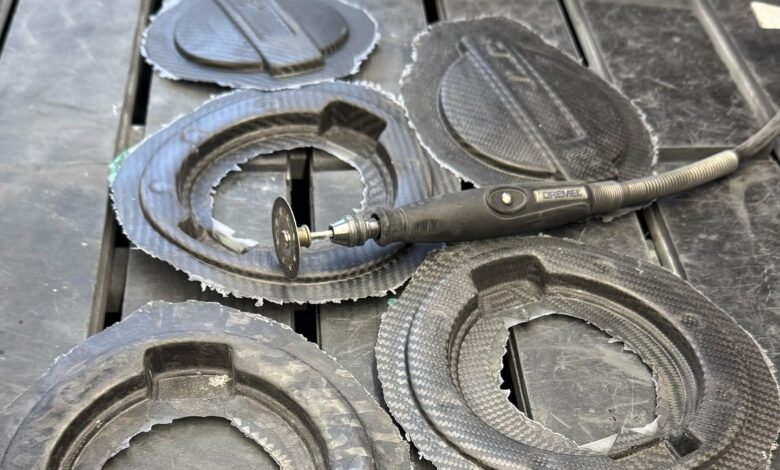
4. Carbon fiber and carbon fiber protector: This piece is cut, cleaned and has a transparent and shiny layer that protects it from UV rays, applied to it to make the symbolic design of carbon fiber even better.
Choosing the Right Fabricator for Your BMW
The success of a custom carbon fiber project hinges on the fabricator’s expertise. Look for a shop with:
* A Portfolio of Performance Work: Evidence of functional parts, not just cosmetic trim.
* Material Knowledge: They should readily discuss the pros and cons of standard 2×2 twill versus forged carbon, or the use of hybrid Kevlar/carbon for impact resistance.
* BMW-Specific Experience: Understanding the chassis nuances of your model ensures mounting solutions are robust and elegant.
The Ultimate Statement of Craftsmanship
Investing in custom carbon fiber car parts is the pinnacle of automotive personalization. It transforms your BMW from a modified car into a tailored machine, where every component serves a deliberate purpose. The result is a vehicle that is lighter, stronger, and uniquely yours—a testament to modern material science and old-world craftsmanship converging to create something extraordinary.
Begin your project with a clear performance or aesthetic objective and partner with a fabricator who understands the language of both carbon fiber and Bavarian engineering. The path to an unparalleled build starts with a single, custom-crafted component.