
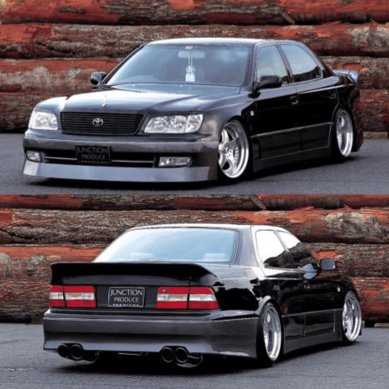
The Lexus LS400 has a reputation for combining V8 power, rear-wheel-drive dynamics, luxury, and long-term durability in a package that has become increasingly interesting to automotive enthusiasts. While the original LS400 was designed primarily as a refined luxury sedan, its platform also gives owners plenty of room to explore performance upgrades, handling improvements, styling changes, and custom builds. A Lexus LS400 modified for performance does not have to become an extreme race car. Some owners prefer a comfortable street build with better wheels, tires, suspension, and exhaust, while others turn the car into a more aggressive project focused on engine tuning, forced induction, drifting, or track use.
The important part is choosing modifications that work together rather than adding parts randomly.
Lexus LS400 Mods: Where Should You Start?
The best starting point depends on the condition of the car and the owner’s objective. Before adding performance parts, an older LS400 should receive a thorough mechanical inspection.
Cooling-system components, belts, hoses, suspension bushings, brakes, fluids, seals, and other aging components should be addressed before chasing horsepower. A strong foundation makes later modifications more reliable.
For a street-oriented project, a sensible progression can be:
- Maintenance and reliability repairs
- Wheels and performance tires
- Suspension improvements
- Brake upgrades
- Intake and exhaust improvements
- ECU and engine tuning
- More substantial engine modifications
This approach makes it easier to determine what each modification actually contributes to the vehicle.
LS400 Tuning and ECU Changes
LS400 tuning can be useful, but expectations should remain realistic. The factory ECU was developed around the original engine, emissions requirements, fuel characteristics, and drivability goals.
Lexus LS400 tuning becomes increasingly important when modifications move beyond basic bolt-ons and begin changing airflow, fueling, ignition, or forced-induction requirements.
A LS400 tuned for a specific combination of intake, exhaust, engine, or forced-induction upgrades should be calibrated around the actual hardware rather than relying on a generic tune.
An ECU recalibration can potentially improve throttle response, ignition and fueling strategy, and how the engine behaves with supporting modifications. However, an ECU tune by itself is unlikely to transform a naturally aspirated LS400 into a dramatically faster car.
Tuning becomes more important when the engine receives substantial hardware changes. Intake, exhaust, cams, forced induction, fuel-system upgrades, and other modifications can change the engine’s requirements.
For a heavily modified engine, professional calibration and appropriate monitoring are much more important than simply installing a generic performance chip.
LS400 Performance Mods for a Street Build
One of the advantages of the LS400 is that owners can improve the driving experience without immediately pursuing extreme horsepower.
Useful LS400 performance mods can include:
- Performance tires
- Lightweight wheels
- Quality suspension components
- Improved brake pads and rotors
- Coilovers or suitable springs and dampers
- Improved alignment
- Intake improvements
- Exhaust upgrades
- ECU tuning
- Cooling-system upgrades where appropriate
These changes can make the car feel substantially different even if the engine remains internally stock.
For a street car, improving grip and chassis response can sometimes produce a more noticeable improvement in real-world driving than adding a relatively small amount of engine power.
Photos and examples of a Lexus LS400 modded for street, stance, drift, or performance use show just how differently owners can approach the platform.
Suspension: Improving the LS400’s Handling
The factory LS400 prioritizes ride quality and refinement. Enthusiasts who want sharper handling therefore often look toward the suspension.
A quality suspension setup can reduce excessive body movement, improve steering response, and make the car feel more controlled through corners.
Coilovers can provide adjustability, but they are not automatically better simply because they allow the car to sit lower. Spring rates, damping, alignment, tire selection, and suspension geometry all influence the final result.
Lowering the car excessively can also create problems. Too little suspension travel can make the vehicle uncomfortable and may actually reduce grip on imperfect roads.
For a street-oriented LS400, a balanced suspension setup is generally more useful than simply making the car as low as possible.
Wheels and Tires
Wheels and tires are among the easiest modifications to notice.
A properly selected wheel and tire package can improve:
- Grip
- Steering response
- Cornering confidence
- Braking performance
- Appearance
Tire quality is especially important. A powerful engine cannot make effective use of its output if the tires cannot maintain traction.
Wheel size should also be selected carefully. Larger wheels can improve appearance and allow larger brake packages, but excessive wheel weight can negatively affect ride quality and responsiveness.
A good LS400 build therefore considers wheel weight, tire compound, width, sidewall characteristics, offset, and clearance rather than choosing wheels based only on appearance.
Exhaust Upgrades
An exhaust system is another common modification.
The objective should not simply be maximum noise. A good exhaust setup should complement the engine and the intended use of the vehicle.
A freer-flowing exhaust can alter sound and potentially reduce restriction, particularly when combined with other engine modifications. However, the actual power improvement from an exhaust alone depends on the specific system and the condition of the engine.
For a street LS400, excessive exhaust volume can also undermine one of the car’s biggest strengths: refinement.
A balanced exhaust can provide a deeper V8 character without making the vehicle unpleasant during everyday driving.
Intake Modifications
Intake modifications are frequently included in naturally aspirated builds.
The basic objective is to provide the engine with an adequate supply of cool, clean air while minimizing unnecessary restriction.
However, an aftermarket intake should not automatically be assumed to produce a large horsepower increase. Poorly designed systems can draw hot air from the engine bay or create other compromises.
For that reason, intake modifications should be considered alongside the rest of the engine and exhaust system.
The goal is improved airflow, not simply replacing the factory airbox with a larger-looking intake pipe.
Engine Upgrades
The LS400’s V8 provides several possible directions for an enthusiast build.
A mild naturally aspirated build can focus on intake, exhaust, tuning, cooling, and other supporting modifications. More ambitious projects can involve internal engine work, camshaft changes, increased compression, or forced induction.
Engine swaps are another possibility for builders who want to pursue a completely different performance target, although a swap introduces substantial additional complexity.
Fuel delivery, cooling, transmission compatibility, wiring, ECU control, exhaust fabrication, and drivetrain strength all become important when an engine is changed.
A large horsepower number means little if the rest of the vehicle cannot reliably support it.
Realistic Lexus LS400 Horsepower Expectations
One of the biggest mistakes when researching a modified LS400 is assuming that every modification produces a dramatic horsepower increase.
The original 1UZ-FE V8 was produced in different configurations and markets, so factory output varies by model year and specification. Depending on the version, factory-rated power was generally in the roughly 250-horsepower range, with later versions offering different specifications.
Basic bolt-on modifications generally produce modest gains on a naturally aspirated engine.
An owner should therefore think in terms of the complete package rather than expecting an intake, exhaust, or ECU modification to suddenly add huge amounts of power.
The situation changes when forced induction enters the picture.
A properly engineered turbocharged or supercharged LS400 can potentially reach substantially higher power levels, but the required supporting modifications increase as the target rises. Fuel delivery, engine management, cooling, transmission, drivetrain, brakes, tires, and engine internals may all become relevant.
A 400-horsepower build and a 600-horsepower build should not be treated as the same project.
Building an LS400 for Drift or Street Use
The LS400’s rear-wheel-drive layout makes it attractive to enthusiasts interested in drift-oriented or aggressive street builds.
For a drift project, power is only one part of the equation. Steering angle, differential setup, suspension geometry, tire selection, chassis condition, cooling, braking, and driver control all matter.
A street-oriented LS400 should be approached differently.
Instead of maximizing horsepower, a balanced build might prioritize:
- Predictable suspension
- Strong tires
- Reliable brakes
- Appropriate wheel alignment
- Cooling-system condition
- Moderate engine upgrades
- Comfortable ride quality
This creates a car that remains enjoyable outside of a track or closed course.
Any drifting or high-speed testing should be conducted only in appropriate controlled environments.
Reliability Considerations for a Modified LS400
Reliability deserves special attention because most LS400s are now older vehicles.
Even a well-known durable engine cannot compensate for deteriorated supporting components.
Before increasing engine output, inspect:
- Cooling system
- Radiator and hoses
- Belts
- Water pump
- Oil leaks
- Suspension bushings
- Ball joints
- Brakes
- Wheel bearings
- Steering components
- Transmission condition
- Differential
- Electrical components
Maintenance history is particularly valuable.
A neglected LS400 with expensive performance parts can be less dependable than a mostly stock car that has been properly maintained.
When increasing power, reliability should be treated as part of the performance build rather than as an afterthought.
Creating a Balanced LS400 Build
There is no single correct way to build an LS400.
A luxury-oriented owner may prefer subtle suspension improvements, high-quality tires, tasteful wheels, and a refined exhaust.
A performance enthusiast may choose coilovers, larger brakes, intake and exhaust modifications, engine tuning, and additional cooling.
A dedicated project builder may eventually pursue forced induction, an engine swap, a stronger drivetrain, or a competition-oriented chassis setup.
The best build is the one that matches the intended use of the car.
Adding expensive parts simply because they are popular can create an inconsistent setup. A better approach is to establish a target first and then select modifications that support that target.
Final Thoughts on the Lexus LS400 Modified Scene
The Lexus LS400 remains an interesting platform because it can be interpreted in many different ways. It can stay close to its original luxury character, become a sharper street car, or evolve into a much more aggressive performance project.
The smartest approach to Lexus LS400 modifications is to build progressively.
Start with maintenance and reliability. Improve tires, suspension, brakes, and handling. Add intake and exhaust upgrades if they fit the goal. Consider ECU tuning when the supporting hardware justifies it. Only then move toward more serious engine modifications or forced induction.
Most importantly, judge a build by how well all of its components work together rather than by horsepower alone.
A properly planned LS400 can combine the refinement of a luxury sedan with the personality of a customized performance car, which is exactly why this platform continues to attract enthusiasts looking for something different from the usual sports-car project.



2 Comments