Street Racing Tires: The Complete Guide to Grip, Performance, and Safety

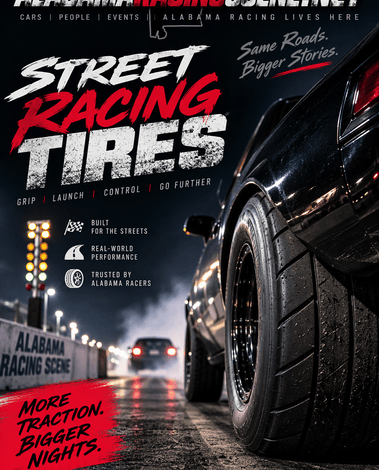
Street racing tires are the single most important upgrade you can make before you hit the strip or the street. No matter how much horsepower your engine produces, if your street racing tires cannot put that power to the ground, you are going nowhere fast. The right set of street racing tires transforms a spinning, sliding mess into a clean, consistent launch that shaves valuable time off your quarter-mile. In this guide, we break down everything you need to know about street racing tires, from compound selection to installation, maintenance, and the safety considerations that every racer must understand.
What Makes Street Racing Tires Different
Street racing tires are engineered with softer rubber compounds than standard passenger tires. This softer compound heats up quickly and creates a sticky surface that grips the pavement under hard acceleration. Drag radials, a popular category of street racing tires, feature a minimal tread pattern that maximizes the contact patch while still remaining street legal in most areas. The reduced tread void means more rubber meets the road, which directly translates to better traction during launch and throughout the run.
The sidewall construction of street racing tires is also fundamentally different from everyday tires. A stiffer sidewall reduces flex during launch, which helps transfer torque to the ground more efficiently. Some street racing tires feature wrinkle-wall designs that allow the sidewall to flex in a controlled way, improving traction at the starting line by allowing the tire to absorb some of the initial shock of the launch. This controlled flex helps prevent wheelspin and keeps the car moving forward instead of spinning in place.
Another key difference is the temperature range in which street racing tires operate. Performance tires are designed to work best when they reach a specific temperature window. Street racing tires are built to heat up quickly during a burnout and maintain that heat through the run. Understanding how your tires respond to heat is essential for consistent performance.
Choosing the Right Compound
Not all street racing tires are created equal. The compound you choose depends on your goals, your budget, and the conditions you race in. If you drive your car primarily on the street and only occasionally race, a longer-wearing drag radial is a smart choice. These tires offer a balance between traction and tread life, making them practical for dual-purpose vehicles. If you are building a dedicated track car, a softer compound that prioritizes grip over tread life will deliver better results, even if the tires wear out faster.
Temperature plays a significant role in compound selection. Softer street racing tires work best in warm conditions, while harder compounds may be necessary in cooler weather to avoid excessive wear. Racing in cold weather on soft tires can cause them to chunk or tear, damaging the tire and reducing performance. Always check the manufacturer’s recommendations for your specific tire model and adjust your driving accordingly.
Consider also the weight and power of your vehicle. A heavy car with high horsepower requires a tire that can handle the load without overheating or failing. Lighter cars can often get away with softer compounds because they place less stress on the tire. Consult with experienced racers or tire specialists to find the compound that matches your combination.
Street Racing Tires and Wheel Fitment
Proper installation is critical for street racing tires. Mounting them on the correct wheel width ensures the contact patch is flat and even. A tire that is too wide for the wheel will bulge, reducing the contact patch and causing uneven wear. A tire that is too narrow will stretch, which can compromise sidewall strength and stability at speed. Always check the manufacturer’s recommended wheel width range for your specific tire.
Tire pressure is another key factor. Too much pressure reduces the contact patch, while too little pressure can cause the tire to roll over on the sidewall, leading to handling problems and potential failure. Start with the manufacturer’s recommended pressure and adjust based on how your car launches. Many racers experiment with different pressures at the track to find the sweet spot for their combination. Keep a log of your settings and results so you can repeat what works.
Wheel alignment also affects how street racing tires wear and perform. Incorrect toe or camber can cause uneven wear and reduce traction. Have your alignment checked regularly, especially if you notice uneven wear patterns on your tires.
Maintenance and Inspection
Regular inspection is essential for street racing tires. They wear faster than standard tires, especially if you race frequently. Check the tread depth regularly and look for uneven wear patterns that may indicate suspension or alignment issues. Small cuts or punctures can become dangerous at high speed, so inspect the sidewalls and tread surface carefully before each race.
Heat cycling is a consideration for serious racers. Each time a tire goes through a heat cycle, its compound changes slightly. Some racers track the number of heat cycles on their tires and replace them before performance drops off. For street-driven cars, this is less of a concern, but for dedicated race cars, it can make a difference in consistency.
Store your street racing tires properly. Keep them away from direct sunlight, extreme temperatures, and ozone sources like electric motors. UV exposure can degrade the rubber compound over time. If you store tires for the off-season, consider wrapping them in plastic to protect them from the elements.
Safety Considerations
Street racing tires are designed for performance, but they are not indestructible. Never exceed the speed rating of your tires. Running tires beyond their rated speed can cause catastrophic failure. Check the sidewall for the speed rating and load index, and ensure your tires are appropriate for your vehicle and intended use.
Inspect tires before every race. Look for bulges, cracks, or embedded objects. A tire failure at speed can be deadly, so never take chances with damaged tires. Replace any tire that shows signs of damage or excessive wear.
Finally, remember that street racing tires are only one part of a safe racing setup. Proper suspension, brakes, and safety equipment are equally important. Choose your equipment carefully, maintain it regularly, and always prioritize safety over speed. The best street racing tires in the world cannot protect you if the rest of your car is not up to the task.
For the bigger picture, see our street racing guide covering culture, risks, and legal options.