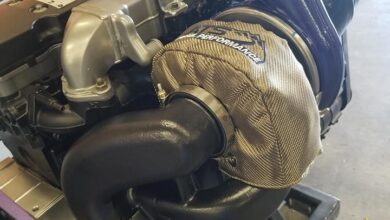

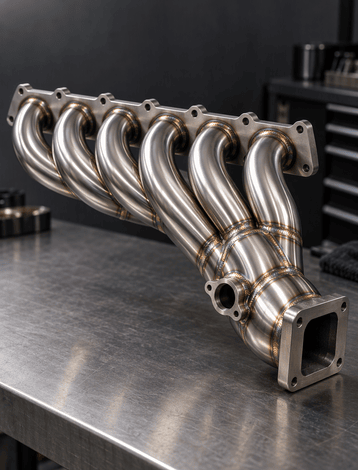
N52 turbo manifold is an exhaust component designed to allow the BMW N52 engine, which originally came naturally aspirated from the factory, to be fitted with a turbocharger for forced induction. Its core function is to collect high-temperature exhaust gas from the engine cylinders, guide it smoothly into the turbocharger turbine, and drive the turbine to rotate, thereby compressing intake air and increasing engine power output.
What Is a Turbo Manifold?
A turbo manifold, also commonly known as an exhaust manifold, is a critical component in a turbocharged system that connects the engine to the turbocharger. Its primary task is to efficiently gather exhaust pulses from each cylinder and direct them to the turbocharger’s turbine inlet. The design quality of a turbo manifold directly affects turbo response speed and power output efficiency. A well-designed manifold can reduce exhaust pulse interference, decrease turbulence, and allow more exhaust energy to hit the turbine, thereby improving boost response.
What Is an N52 Turbo Manifold?
The N52 turbo manifold is an aftermarket component specifically developed for the BMW N52 engine. The N52 engine itself is a naturally aspirated engine, and BMW did not offer a factory turbocharged version of the N52. Therefore, the existence of the N52 turbo manifold serves one purpose: to enable owners who wish to add forced induction to their N52 to have a bolt-on exhaust pathway that connects to the turbocharger.
Products currently available on the market, such as those from 22RPD and Laurent Motors, are typically made from stainless steel (such as 316L or SS304) and are designed with specific turbo flange interfaces (such as T3 or GT35 frame v-band) as well as wastegate ports. Since the N52 was not designed for turbocharging from the outset, installing these manifolds typically requires consideration of clearance, additional components, and ECU tuning.
What Does the Number “52” in N52 Mean?
The “52” in N52 does not represent displacement but is part of BMW’s internal engine code system. According to BMW’s technical documentation, the “N” in the engine code indicates the new generation of BMW Group engines, and the following number “5” represents inline six-cylinder. The complete code (such as N52B30) will also include displacement information, where “B30” typically corresponds to approximately 3.0 liters of displacement. Therefore, “52” is merely a model series identifier within the engine family and does not carry a separate technical meaning like “horsepower” or “displacement.”
Where Is It Located?
The N52 turbo manifold is installed on the exhaust side of the engine, replacing the original factory naturally aspirated exhaust manifold. It bolts directly to the exhaust ports on the cylinder head, with the other end connecting to the turbocharger’s turbine inlet. Since the N52 is an inline-six engine, the manifold needs to collect exhaust from six cylinders and merge them into one or two outlets leading to the turbocharger. Its physical location is within the engine bay, typically between the engine block and the firewall or front-end cooling module, depending on the specific chassis layout.
Which Vehicles Is It Suitable For?
The N52 engine was widely used in BMW models from the mid-2000s to the early 2010s. Based on information provided by manifold suppliers, applicable models include but are not limited to:
- 1 Series: E82/E88 125i, 128i, 130i
- 3 Series: E90/E91/E92/E93 323i, 325i, 328i, 330i
- 5 Series: E60/E61 523i, 525i, 528i, 530i, F10 528i
- Z4: E85/E86 Z4 2.5i, 2.5si, 3.0i, 3.0si, E89 sDrive23i, sDrive30i
- X3: E83 X3 2.5i, 2.5si, 3.0i, 3.0si
- X1: E84 X1 xDrive25i, xDrive28i
- Other: 630i, 730i, etc.
It should be noted that different suppliers may have varying coverage of chassis codes, and some products (such as 22RPD) currently only explicitly list fitment for the E90 chassis. Before purchasing, the specific engine code (N52B25 or N52B30) and chassis code should be confirmed.
What Does It Do, and What Results Does It Deliver?
The core function of the N52 turbo manifold is to convert a naturally aspirated engine into a forced induction engine. Specifically, it does the following:
- Collects and guides exhaust gas: Merges high-temperature, high-pressure exhaust from the six cylinders into a single flow path and directs it to the turbocharger turbine.
- Drives the turbine: The impact of exhaust gas causes the turbine to rotate, which in turn drives the compressor on the same shaft to compress intake air.
- Increases intake density: The compressed air, after cooling through the intercooler, enters the engine cylinders, allowing more fuel to be burned and thereby increasing power.
In terms of results, the N52 turbo manifold itself does not directly generate a specific horsepower figure. Actual power gains depend on the turbocharger size, boost level, fuel system upgrades, and ECU tuning. Taking the 22RPD manifold as an example, it is designed around the GTX35R frame turbocharger, and the manufacturer states that this turbo is suitable for high-output N52 applications in the 400–700 whp range. This means that with appropriate supporting modifications, the N52 engine has the hardware foundation to support substantial power increases. However, it must be emphasized that the manifold is only one part of the system; fuel injectors, fuel pump, intercooler, and professional tuning are all indispensable.