
The Jeep 4.0L inline-six is one of the best-known engines in the Jeep world. It powered vehicles such as the Cherokee XJ and Wrangler and earned a reputation for simple construction, strong low-end torque, and long service life. The engine is naturally aspirated from the factory, but owners who want more performance often look at forced induction.
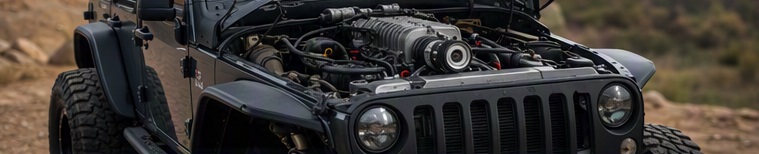
A jeep 4.0 liter supercharger can be an interesting upgrade for someone who wants more horsepower and torque without replacing the entire engine. A supercharger forces additional air into the intake, allowing the engine to burn more fuel and produce more power.
Before adding forced induction, Jeep owners can also review other performance upgrades and modification ideas for the Jeep WJ to understand how different upgrades work together.
The “Jeep 4000 cc” refers to the Jeep 4.0-liter inline-six engine, commonly called the Jeep 4.0L (4,000 cc) I6. It was used in vehicles such as:
- Jeep Wrangler
- Jeep Cherokee XJ
- Jeep Grand Cherokee ZJ/WJ
Why Use a Jeep 4.0 Liter Supercharger?
The 4.0L engine has plenty of useful characteristics for performance modifications. Depending on model year and application, factory versions produced roughly 180–190 horsepower, with torque around 220 lb-ft. The engine is a 4.0-liter, 242-cubic-inch inline-six with an iron block and cylinder head.
For a Jeep owner, the main attraction of supercharging is not simply a higher horsepower number. Extra torque can make a noticeable difference when climbing hills, driving through sand, carrying equipment, or running larger tires.
A supercharger is mechanically driven by the engine, normally through a belt. Because it does not depend on exhaust gas to build boost like a turbocharger, throttle response can be very direct.
How a Jeep 4.0 Liter Supercharger Works
A supercharger compresses the air entering the engine. More air means the engine can burn more fuel while maintaining the correct air-fuel mixture.
The basic process is:
Air filter → Supercharger → Compressed air → Intake manifold → Engine
There are several supercharger designs, including Roots-style, twin-screw, and centrifugal systems. Each has different characteristics. A positive-displacement design can provide strong low-rpm response, while a centrifugal system generally builds more boost as engine speed increases.
The important point is that the supercharger itself is only one part of the complete system. Fuel delivery, ignition timing, intake temperature, exhaust flow, belt drive, and engine calibration all matter.
Performance Benefits of a Jeep 4.0 Liter Supercharger
The biggest reason to install forced induction is additional performance.
A properly selected and tuned system can provide:
- More horsepower
- More torque
- Faster throttle response
- Better acceleration
- Improved performance with larger tires
- Stronger power when climbing hills
- More usable power for off-road driving
The Jeep 4.0L already has useful torque, so adding boost can make the engine feel considerably stronger. However, actual gains depend on the supercharger, boost pressure, fuel quality, engine condition, exhaust system, tuning, and vehicle configuration.
It is better to think about the upgrade as a complete engine system rather than expecting one universal horsepower figure.
Choosing the Right Supercharger
Not every supercharger is appropriate for every Jeep 4.0L.
Before buying a kit, check the exact engine year and vehicle. The Cherokee XJ, Wrangler YJ/TJ, and Grand Cherokee applications can have differences in intake systems, electronics, accessory arrangements, and available kits.
A good system should include the correct mounting hardware, pulley arrangement, belt drive, intake components, and provisions for proper fuel and ignition calibration.
Older aftermarket Jeep performance literature also discusses supercharging the 4.0L and emphasizes that forced induction requires careful component selection rather than simply adding boost to an engine.
Installation Considerations
Installing a jeep 4.0 liter supercharger is more involved than installing a simple intake or exhaust modification.
The exact process varies by kit, but generally involves removing or modifying the factory intake components, installing the supercharger and brackets, routing the belt, connecting intake plumbing, and setting up the required fuel and tuning changes.
An intercooler may also be used depending on the system and intended boost level.
Before installation, inspect the engine carefully. Compression, oil pressure, cooling-system condition, ignition components, injectors, sensors, and general maintenance should all be considered.
There is little value in adding forced induction to an engine that already has serious mechanical problems.
How Much Boost Is Safe?
Boost pressure should not be selected simply because a larger number sounds better.
The original 4.0L engine specifications vary by model and year. Some factory specifications list an 8.8:1 compression ratio, while other applications differ, so the exact engine needs to be identified before choosing a setup.
Conservative boost is generally more appropriate for a street-driven or off-road Jeep with stock internals. Increasing boost increases cylinder pressure and heat, placing additional demands on pistons, rods, head gasket, cooling, fuel delivery, and the rest of the drivetrain.
A professional tune is therefore one of the most important parts of a supercharger installation.
Tuning Matters as Much as the Hardware
A supercharger does not automatically make a reliable performance engine.
The engine needs enough fuel for the additional airflow, while ignition timing must be appropriate for the increased cylinder pressure. Incorrect calibration can cause detonation, excessive heat, poor drivability, or engine damage.
Fuel quality also matters. The correct fuel requirement depends on compression ratio, boost level, ignition timing, intake temperature, and tuning.
For this reason, a dyno or professional calibration can be a worthwhile investment after installing a supercharger.
Black market performance reviews
Is a Supercharger Good for Off-Roading?
For an off-road Jeep, one of the biggest advantages is stronger torque and throttle response.
When a Jeep is climbing slowly over rocks or driving through soft terrain, predictable power can be more useful than a high peak horsepower number. Extra torque can also help compensate for the additional load created by larger tires.
However, engine power is only part of the equation. Transmission strength, axles, cooling, gearing, brakes, tires, and suspension should all match the intended use.
A supercharger can make a Jeep faster, but it does not automatically make the rest of the vehicle stronger.
Maintenance After Installation
A supercharged Jeep deserves regular inspections.
Pay attention to the supercharger belt, tensioner, hoses, intake connections, spark plugs, engine temperature, and oil condition. Belt slip can reduce boost and create inconsistent performance.
It is also important to monitor unusual noises, overheating, detonation, or changes in engine behavior. Catching a problem early is much cheaper than repairing an engine after a failure.
The original 4.0L’s reputation for durability comes from proper maintenance, so the same principle should continue after adding forced induction.
Is the Jeep 4.0 Liter Supercharger Worth It?
For an owner who wants to keep the original inline-six but wants substantially better performance, a jeep 4.0 liter supercharger can be an attractive project.
The best results come from a complete approach: start with a healthy engine, choose a properly matched kit, use conservative boost, make sure fuel delivery is adequate, and have the engine calibrated correctly.
The 4.0L is already a distinctive Jeep engine. Adding forced induction can transform its character while retaining the familiar inline-six layout.
Before purchasing anything, identify the exact Jeep, engine year, transmission, intended use, and desired power level. That information will make it much easier to choose a supercharger system that fits the vehicle rather than simply buying the largest available kit.
Jeep 4.0L Engine Reference
The Jeep 4.0L is commonly identified as the AMC 242 inline-six. Reference specifications include approximately 4.0 liters/242 cubic inches, a 3.88-inch bore, a 3.41-inch stroke, seven main bearings, OHV architecture, and multi-point fuel injection in later applications.
For historical factory information, the Jeep engine guide also documents the 4.0L engine and discusses forced-induction concepts including supercharging.
Reference Sources
- Jeep 4.0L engine specifications and service information
- JeepTech AMC 242 4.0L engine reference
- Jeep engine guide covering supercharging and forced induction
The jeep 4.0 liter supercharger is an appealing upgrade for drivers who want more power from the legendary Jeep inline-six. The biggest advantages are stronger acceleration, improved torque, and more responsive performance.
But reliability should remain the priority. A healthy engine, suitable supercharger, correct fuel system, conservative boost, good cooling, and professional tuning are more important than chasing the biggest possible dyno number.
For a well-planned Jeep build, forced induction can give the classic 4.0L a new level of performance while keeping the character that made the engine so popular in the first place.