
Japanese Street Racing Cars: The Complete Guide to Icons, Culture, and Performance

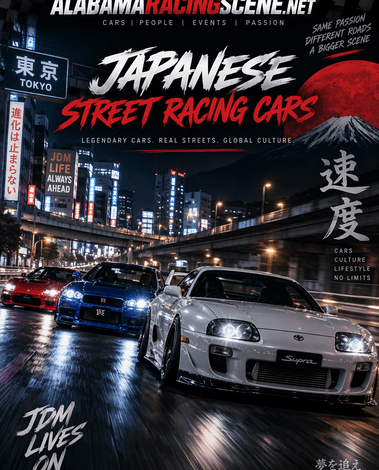
Japanese street racing cars have a legendary status that few other automotive cultures can match. From the mountain passes of Japan to the highways of Osaka, these machines were built, modified, and raced in a culture that valued precision, control, and style above raw horsepower. Today, Japanese street racing cars remain some of the most sought-after platforms for enthusiasts around the world, and their influence can be seen in everything from video games to blockbuster movies. This guide explores the history, the machines, and the culture behind these iconic vehicles.
The Tribes and Their Machines
Japanese street racing culture split into distinct tribes, each with its own preferred cars and racing style. The Roulette tribes, who raced at top speed on highways, favored cars with high straight-line stability and tunable turbocharged engines. The Nissan Skyline GT-R, Mazda RX-7, Toyota Supra, and Honda NSX were the weapons of choice. These cars were built for sustained high-speed runs, often exceeding 300 kilometers per hour on public highways in the dead of night.
The Touge tribes, who raced on mountain passes, valued lightweight, agile cars. The Toyota AE86, Honda Civic, and Mazda RX-7 were ideal for the tight, technical roads where skill mattered more than horsepower. Touge racing emphasized precise braking, smooth cornering lines, and an intimate understanding of the road. The drift tribes built their culture around the Nissan Silvia, Toyota Chaser, and other rear-wheel-drive cars that could slide through corners with style and control. The Zero-yon drag tribes focused on quarter-mile acceleration, building high-horsepower machines for straight-line competition.
These tribes and their machines became the foundation of Japanese street racing culture. They represented different philosophies of driving, but they shared a common commitment to modification, craftsmanship, and community.
The Golden Era of Japanese Performance Cars
Japanese street racing cars are popular today because they represent a golden era of automotive engineering. The 1980s and 1990s were a time when Japanese manufacturers competed fiercely, building cars that were over-engineered and ripe for modification. The engines—the RB26DETT in the Skyline GT-R, the 2JZ-GTE in the Toyota Supra, the 13B rotary in the Mazda RX-7—became legends because they could handle massive power increases with relatively simple modifications.
The RB26DETT, a 2.6-liter twin-turbocharged inline-six, was built with a cast-iron block that could withstand enormous boost. Enthusiasts discovered that the engine could handle over 600 horsepower with basic upgrades, and much more with internal work. The 2JZ-GTE, a 3.0-liter twin-turbocharged inline-six, earned a similar reputation for durability. The engine’s iron block and strong internals made it a favorite for high-horsepower builds, and its legend only grew when tuners pushed it beyond 1,000 horsepower.
The 13B rotary engine, with its compact size and high-revving nature, gave the Mazda RX-7 a unique character. Rotary engines require more maintenance than piston engines, but they reward enthusiasts with a distinctive sound and a power delivery that feels unlike anything else on the road.
Why Japanese Street Racing Cars Still Matter
For buyers today, these cars offer a unique combination of performance, reliability, and cultural significance. A well-maintained Japanese street racing car is not just a vehicle; it is a piece of automotive history. The cars represent a time when manufacturers took risks and built machines that were designed to be driven hard.
The aftermarket support for Japanese street racing cars remains enormous. Parts are readily available, and the community knowledge is deep. Whether you want to restore a classic to factory condition or build a high-horsepower monster, you can find the parts and the expertise you need.
The cultural significance of these cars extends beyond the automotive world. They appear in movies, video games, and music, influencing a generation of enthusiasts who grew up dreaming of owning a Skyline or a Supra. Owning one of these cars is a way of connecting with that culture and preserving its legacy.
Buying and Building Responsibly
If you are in the market for a Japanese street racing car, do your research. Auction listings can reveal a car’s history and modification style. A car built for Touge will have different modifications than one built for highway racing. Understanding these differences helps you choose a platform that matches your goals.
Inspect the car carefully before purchasing. Rust is a common issue on older Japanese cars, especially around the strut towers, rocker panels, and rear hatch. Check the engine compression and look for signs of abuse. A car that has been raced hard may have hidden damage that is expensive to repair.
Consider your budget for modifications. Japanese street racing cars respond well to tuning, but quality parts are not cheap. Plan your build carefully and prioritize safety and reliability over peak horsepower. A reliable 400-horsepower car is more enjoyable than a fragile 600-horsepower car that breaks every weekend.
Remember that the street racing culture that made these cars famous was dangerous and illegal. Today, the best way to honor that legacy is to enjoy these machines at sanctioned events and track days, where safety and skill are valued above reckless speed. Many tracks host JDM-focused events where owners can drive their cars in a safe environment and connect with other enthusiasts.
Maintaining Your Japanese Street Racing Car
Maintenance is essential for keeping a Japanese street racing car reliable and valuable. Change the oil regularly and use high-quality fluids. Check the timing belt or chain according to the manufacturer’s schedule. Inspect the suspension bushings and replace them as needed. Older cars often have worn bushings that affect handling and ride quality.
Pay attention to the cooling system. High-performance engines generate a lot of heat, and a failing radiator or water pump can cause catastrophic damage. Upgrade the cooling system if you plan to drive hard or add power.
Finally, protect your investment. Store your car in a garage if possible, and keep it clean and waxed. Japanese street racing cars are appreciating assets, and a well-maintained example will hold its value better than a neglected one.
The Future of Japanese Street Racing Cars
The future of Japanese street racing cars is uncertain but promising. As these cars age, fewer clean examples remain, which drives up prices for collector-quality vehicles. At the same time, a new generation of enthusiasts is discovering these cars and building them in new ways.
Electric conversions and modern engine swaps are becoming more common, allowing enthusiasts to enjoy classic chassis with modern power. While purists may object, these builds keep the cars on the road and introduce them to new audiences.
Whatever the future holds, Japanese street racing cars will remain an important part of automotive culture. They represent a time when Japanese engineering pushed boundaries and created machines that captured the imagination of the world.


